Monday, April 11, 2016

Cleaning Up Our Mess

We all need to become aware of our casual indifference toward the products we buy and use, then toss away—out of sight, out of mind. All products containing plastics are very worrisome. Only about 25% of plastics produced in the US is recycled. What happens to the rest? What happens to plastics produced elsewhere?

Plastics are forever. Watch this video to get a peek into what one organization is dealing with on just one island in Alaska. This is the tip of the proverbial iceberg...


Realize that plastics have become ubiquitous. From CBC News:
Perhaps best known are the ocean gyres — areas where large amounts of floating plastic have accumulated in easily visible "garbage patches." Of perhaps even more concern is research that has revealed less visible, but pervasive contamination by "microplastic" — tiny particles perhaps a millimetre in size or smaller. These are fragmented pieces of many different forms of plastic that have been found in beach sand in the most remote parts of the world, in sediments in the deep ocean and frozen into arctic ice. 
 Listen to "A New Silent Spring," a podcast interview with marine biologist Boris Worm on CBC's Quirks and Quarks. It may change the way you think about plastic, what happens to it, where it is, what damage it is doing.

Be aware.

Tuesday, February 3, 2015

The Countdown is On!

“On Feb 26 the FCC will vote to save net neutrality or let Comcast and other ISPs create Internet slow lanes. Some members of Congress, on behalf of their Cable donors, are trying to stop the FCC from protecting the Internet we love. There isn't much time to stop them, contact them now.”

 Join the Battle for Net Neutrality

Join the Battle!

Saturday, November 15, 2014

Burn trash to cook & generate power!

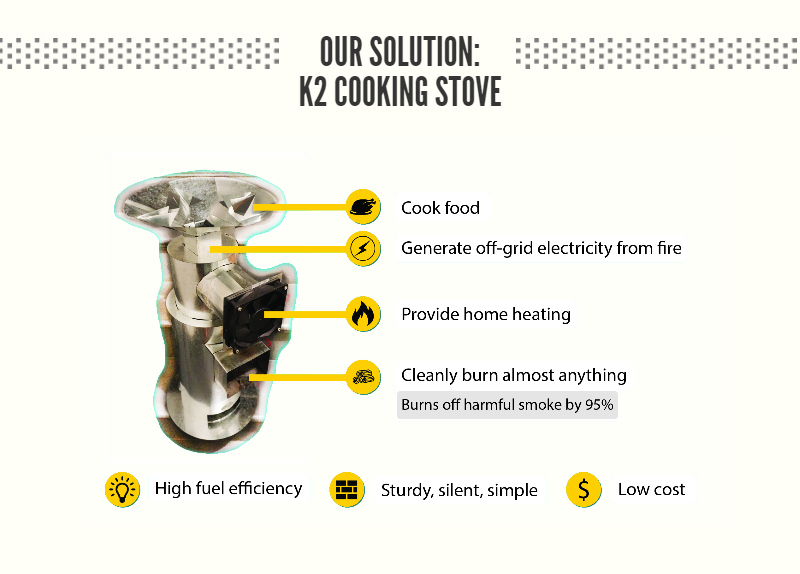
This morning, we ran across a very worthwhile endeavor on IndieGoGo. a site where folks with good ideas may campaign for funds to support the development of a project. Over in Berkeley, CA, a unique stove is being developed for use in developing countries where the local people now cook over open fires. This low-cost stove burns trash and biomass while generating electricity for charging small devices, heating a small space, and producing efficient heat for cooking. According to the enthusiastic students and engineers working on this project, smoke-induced illness accounts for more deaths than HIV & malaria combined. The K2 Cooking Stove burns off 95% of harmful smoke. The use of the K2 provides a safe method of burning trash for cooking. Trash burns well and it is everywhere. As these entrepreneurs say, "We are approaching the global waste problem by letting users know that, hey, trash isn't the best, but we have something that can burn it cleanly for you."

Energant K2 Cooking Stove

The team won many awards for their first generation stove, KleenCook. It was received with "huge appreciation and acceptance" in the Philippines. The K2 is being developed specifically for China. We encourage you to check out this project now and support the team with a donation. The campaign runs through December 20, 2014.
K2 goes beyond its pure function and direct benefit. Besides bringing electricity, cleaner air, and a cleaner environment, your contribution has long-standing and far-reaching impact.

Saturday, January 25, 2014

Working for the Few


Working for the Few

Political capture and economic inequality

Published: 20 January 2014

Author: Ricardo Fuentes-Nieva, Head of Research, Oxfam GB; Nicholas Galasso, Research and Policy Advisor, Oxfam America

"Almost half of the world’s wealth is now owned by just one percent of the population, and seven out of ten people live in countries where economic inequality has increased in the last 30 years. The World Economic Forum has identified economic inequality as a major risk to human progress, impacting social stability within countries and threatening security on a global scale.
"This massive concentration of economic resources in the hands of fewer people presents a real threat to inclusive political and economic systems, and compounds other inequalities – such as those between women and men. Left unchecked, political institutions are undermined and governments overwhelmingly serve the interests of economic elites – to the detriment of ordinary people.
"In this paper, Oxfam shows how extreme inequality is not inevitable, with examples of policies from around the world which have reduced inequality and developed more representative politics, benefiting all, both rich and poor. Oxfam calls on leaders at the 2014 World Economic Forum at Davos to make the commitments needed to counter the growing tide of inequality."
Please download a PDF of this brief at Oxfam International. You may also read it online at Issuu.com or below.

Only 85 people.

Now that you know, what will you do about it?


Sunday, April 28, 2013

Wealth Inequality In America

Nearly everyone is completely mistaken about this. This excellent graphic video will reveal the truth. You will be shocked. Guaranteed.

http://youtu.be/QPKKQnijnsM
Source: Politizane

Thursday, February 28, 2013


Bill Moyers

The Huffington Post writes about Bill Moyers, "A broadcast journalist for more than four decades, Bill Moyers has been recognized as one of the unique voices of our times, one that resonates with multiple generations. In 2012, at the age of 77, Moyers began his latest media venture with the launch of Moyers & Company on air and online at BillMoyers.com – providing "conversations on democracy" and explorations of contemporary culture, making sense of what matters to us all." We encourage you to watch, listen and learn from the cogent interviews and commentary he presents on the most pressing issues of our time.

Friday, October 7, 2011

Inspiring Presence


That’s been one of my mantras – focus and simplicity. Simple can be harder than complex: You have to work hard to get your thinking clean to make it simple. But it’s worth it in the end because once you get there, you can move mountains. - Steve Jobs